
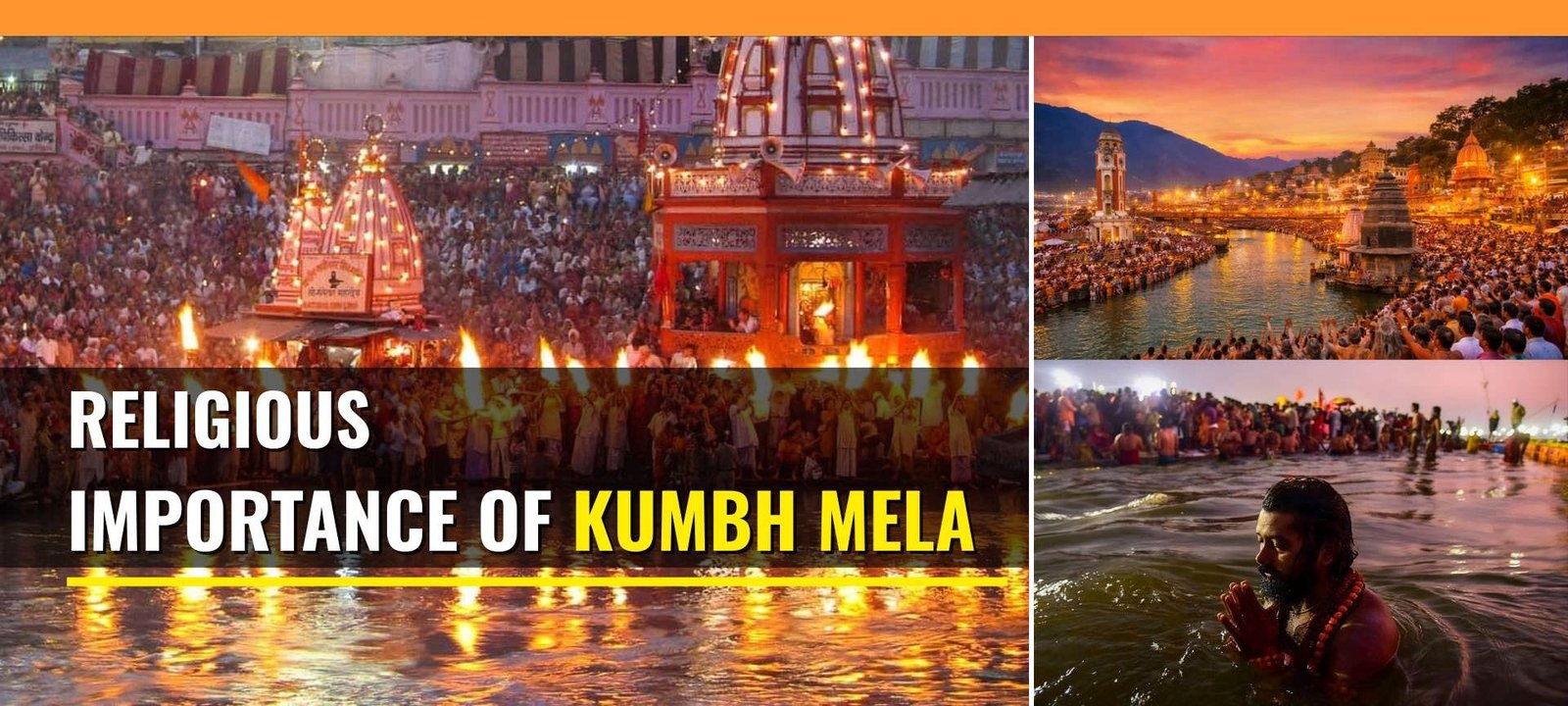
Kumbh Mela holds immense religious significance for Hindus and is regarded as the most sacred spiritual gathering in the world. Millions of devotees participate in this grand festival, rising above barriers of caste, creed, region, and social status. Recognized by UNESCO as an intangible cultural heritage, Kumbh Mela is held every 12 years (with Ardh Kumbh every 6 years) at four holy riverbank cities — Prayagraj, Haridwar, Nashik, and Ujjain.
The festival is deeply rooted in the mythology of Samudra Manthan, when drops of the divine nectar (Amrit) fell at these sacred sites. This belief makes the rivers Ganga, Yamuna, and Godavari spiritually powerful, and bathing in them during Kumbh is considered a path to purification and liberation.
Kumbh Mela also attracts extraordinary saints and ascetics from across India, each representing different spiritual traditions:
Another important group is the Kalpvasis, who spend an entire month on the banks of the Ganga during Kumbh. They live a simple life of discipline, performing daily rituals, meditating, and bathing three times a day as part of their spiritual commitment. More than just a festival, Kumbh Mela is a powerful expression of faith, unity, and timeless Hindu tradition.
Kumbh Mela is the world’s largest religious congregation, held every 12 years at four sacred riverbank cities. Millions of pilgrims, saints, seekers, and travelers gather to witness this extraordinary spiritual phenomenon. For many, attending Kumbh Mela is a once-in-a-lifetime experience and a major milestone in their spiritual journey.
Kumbh Mela is not just a mere festivity like Diwali and Holi, but holds lot of importance for people in India. People look up to Kumbh Mela with highest regard, as this event gives them a golden opportunity to liberate themselves from the miseries and sufferings of life. It enables them to take a holy dip in the sacred water and wash away all the sins they have committed in the past. People come from different parts of the country to be a part of this sacred ceremony. It is believed that taking a holy dip in water paves way for attainment of Moksha.
Rig Veda has a mention about the significance of convergence of river Ganges, Yamuna and Saraswati at Prayag or Sangam.
References can be found about the significance of this ritual in Varaha Purana and Matsya Purana as well. There is a belief that the ashram of the learned Bharadvaja, where Lord Ram, Laxman and Sita lived at the time of their exile, was situated at Sangam. It is said that a number of saints including the great Shankaracharya and Chaitanya Mahaprabhu visited Sangam and observed the Kumbh Mela. The great Indian epics such the Ramayana and Mahabharata have mentioned that a yagna was conducted by Lord Brahma at Sangam.
Bathing in the holy river on the auspicious occasion of Kumbh Mela is the most important activity for millions of people in India. A large tented city is erected and pilgrims stay at tents owned by Pandas (religious and spiritual guides) and at various ashrams. Others will just camp on the ground or turn up for the actual bathing day. Some of these bathing days are designated “royal,” and it is on these days that the naga sadhus (naked mendicants) parade and bathe. On other days there will still be people bathing and other events and random processions.
The main ritual performed at that Kumbh Mela is the ritual bath. Hindus believe that submerging themselves in the sacred waters on the most auspicious day of the new moon will absolve them and their ancestors of sin, thus ending the cycle of rebirth. Pilgrims start lining up to bathe from around 3 a.m. on this day.
As the sun comes up, the different groups of sadhus move in procession towards the river to bathe. The Nagas usually lead, while each group tries to outdo the others with more grandeur and fanfare. The moment is magical, and everyone is absorbed in it.
After bathing, the pilgrims wear fresh clothes and proceed to worship by the river bank. They then walk around listening to discourses from the various sadhus.
