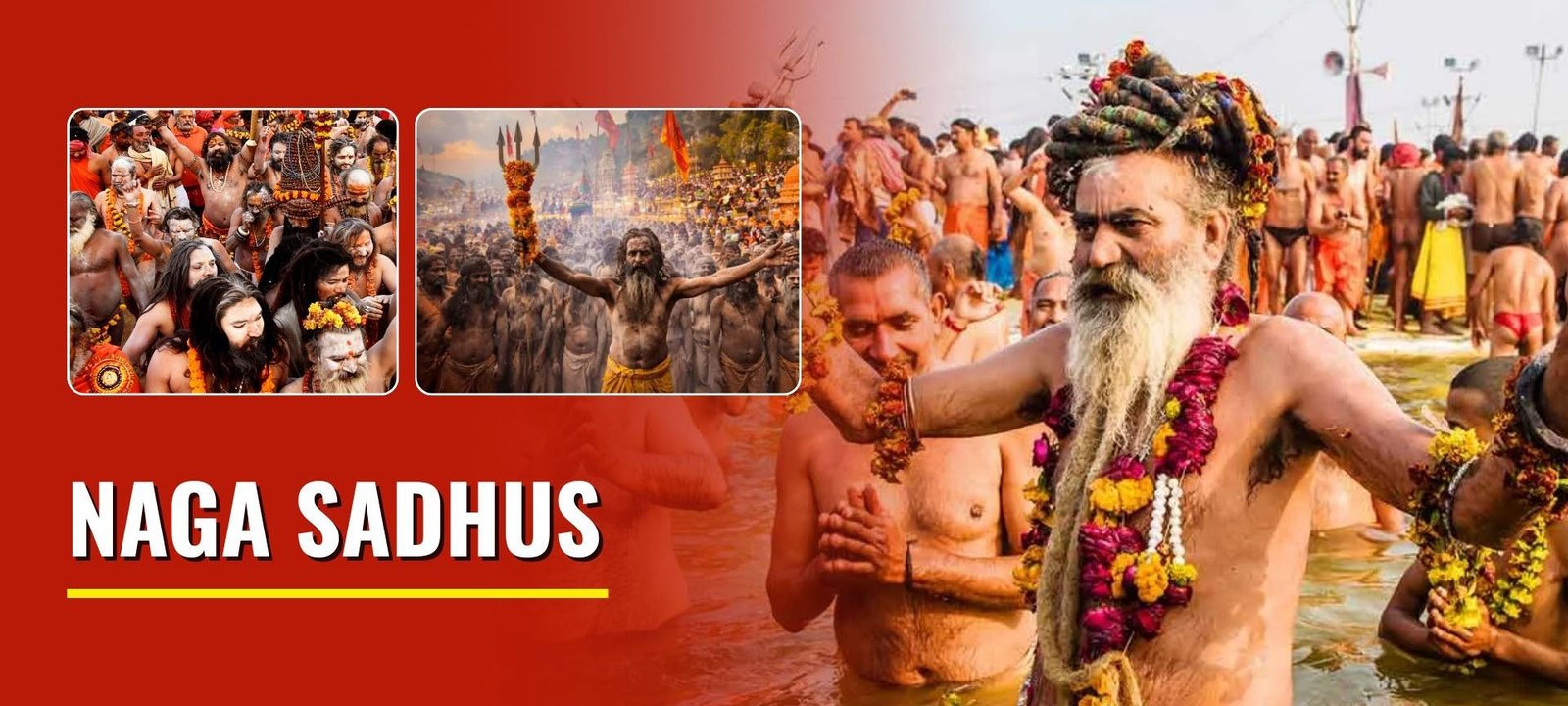
Naga Sadhus
The Kumbh Mela is the largest spiritual gathering in the world and offers a rare opportunity to witness the presence of Naga Sadhus in Kumbh Mela, one of the most fascinating aspects of this grand event. These ascetics attract the attention of devotees and travelers from across the globe due to their unique lifestyle and deep spiritual practices.
Naga Sadhus, also known as Naga Babas, are primarily devotees of Lord Shiva. They live in secluded Himalayan caves, forests, or monasteries known as Akharas, far away from worldly life. These sadhus usually remain away from public view and appear mainly during major religious gatherings like the Kumbh Mela to participate in sacred rituals.
Importance of Naga Sadhus at Kumbh Mela
The presence of Naga Sadhus in Kumbh Mela is considered highly auspicious and forms one of the most powerful and visually striking aspects of the festival. Their participation is deeply rooted in tradition, symbolizing renunciation, spiritual strength, and the preservation of ancient Hindu practices.
- They lead the Shahi Snan (Royal Bath): Naga Sadhus are given the highest honor of taking the first holy dip in the sacred river, marking the official beginning of this important ritual.
- Symbol of spiritual power and detachment: Their ash-covered bodies and fearless presence represent complete renunciation of worldly life and deep devotion to Lord Shiva.
- Grand Peshwai processions: Their royal entry processions showcase centuries-old traditions, with chanting, decorated chariots, and a powerful display of spiritual energy.
- Guides for devotees: Pilgrims seek their blessings, believing it helps in spiritual growth, purification, and the path towards moksha (liberation).
Their presence not only enhances the spiritual atmosphere of the Kumbh Mela but also reflects the rich heritage and discipline of ancient Indian ascetic traditions.
Naga Sadhu Lifestyle and Spiritual Path
The lifestyle of Naga Sadhus in Kumbh Mela is rooted in extreme discipline and spiritual commitment, making them one of the most unique ascetic groups in India. Their way of life is centered on self-control, inner transformation, and devotion to Lord Shiva.
- Renounced living: They completely detach themselves from material comforts, social identity, and personal possessions.
- Years of isolation: Many Naga Sadhus spend long periods in remote regions like the Himalayas, focusing on meditation and spiritual practices.
- Rigorous initiation process: Becoming a Naga Sadhu involves strict training, testing endurance, and following a disciplined code of conduct under guidance.
- Simple and symbolic lifestyle: Their appearance and daily routine reflect a life free from ego, desire, and dependency on the physical world.
- Spiritual goal: Their ultimate aim is to achieve higher consciousness and liberation through continuous practice and unwavering dedication.
This path of intense discipline is what makes Naga Sadhus in Kumbh Mela a powerful symbol of spiritual strength and renunciation.
How to Identify Naga Sadhus
Identifying Naga Sadhus in Kumbh Mela is relatively easy due to their unique and striking appearance, which reflects their renounced lifestyle and deep spiritual practices.
- Minimal or no clothing: Naga Sadhus often remain unclothed or wear very little, symbolizing complete detachment from material life and societal norms.
- Ash-covered body: Their bodies are smeared with sacred ash, which represents purity, detachment, and the transient nature of human life.
- Long, matted hair: They keep long, uncut hair, often tied in thick locks, signifying a life dedicated to spiritual discipline.
- Rudraksha beads: Many Naga Sadhus wear multiple Rudraksha malas, which are associated with Lord Shiva and are believed to hold spiritual value.
- Traditional symbols: Some carry tridents, swords, or staffs, reflecting strength, protection, and ancient warrior traditions.
These distinctive features make Naga Sadhus in Kumbh Mela one of the most recognizable and captivating sights during the festival.
Naga Sadhu Rituals and Beliefs
The rituals and practices of Naga Sadhus are deeply rooted in ancient spiritual traditions and reflect their path of discipline, devotion, and inner transformation. These practices are symbolic and are followed with specific spiritual intent.
- Use of chilum in rituals: In some Akharas, smoking a chilum is part of traditional practices, often associated with meditation and focus, and linked to devotion towards Lord Shiva.
- Use of herbal preparations: Certain natural substances like bhang are used in controlled and ritualistic contexts, believed to aid in deep meditation and spiritual awareness.
- Ash as a sacred element: Applying ash on the body is itself a ritual, symbolizing detachment and the temporary nature of physical existence.
- Daily spiritual practices: Their routine includes meditation, chanting, and yogic practices aimed at achieving higher levels of consciousness.
These rituals form an important part of the identity of Naga Sadhus in Kumbh Mela, making them a powerful representation of ancient spiritual traditions.
Some of the famous saints groups are
Apart from Naga Sadhus, the Kumbh Mela brings together various famous saint groups, each following unique spiritual practices and disciplines rooted in ancient Hindu traditions.
- Naga Sadhus – Known for their ash-covered bodies and complete renunciation, they represent detachment from worldly life and deep spiritual commitment.
- Urdhwavahurs – These ascetics practice extreme penance by keeping one arm raised for years, symbolizing dedication, endurance, and control over the body.
- Parivrajakas – Wandering monks who travel from place to place, often maintaining silence and living a life devoted to spiritual learning and detachment.
- Shirshasins – Ascetics known for practicing intense meditation techniques, including prolonged headstands as a form of discipline and focus.
These diverse traditions highlight the richness of spiritual paths within Hinduism, making the Kumbh Mela a unique gathering of different forms of ascetic life.