
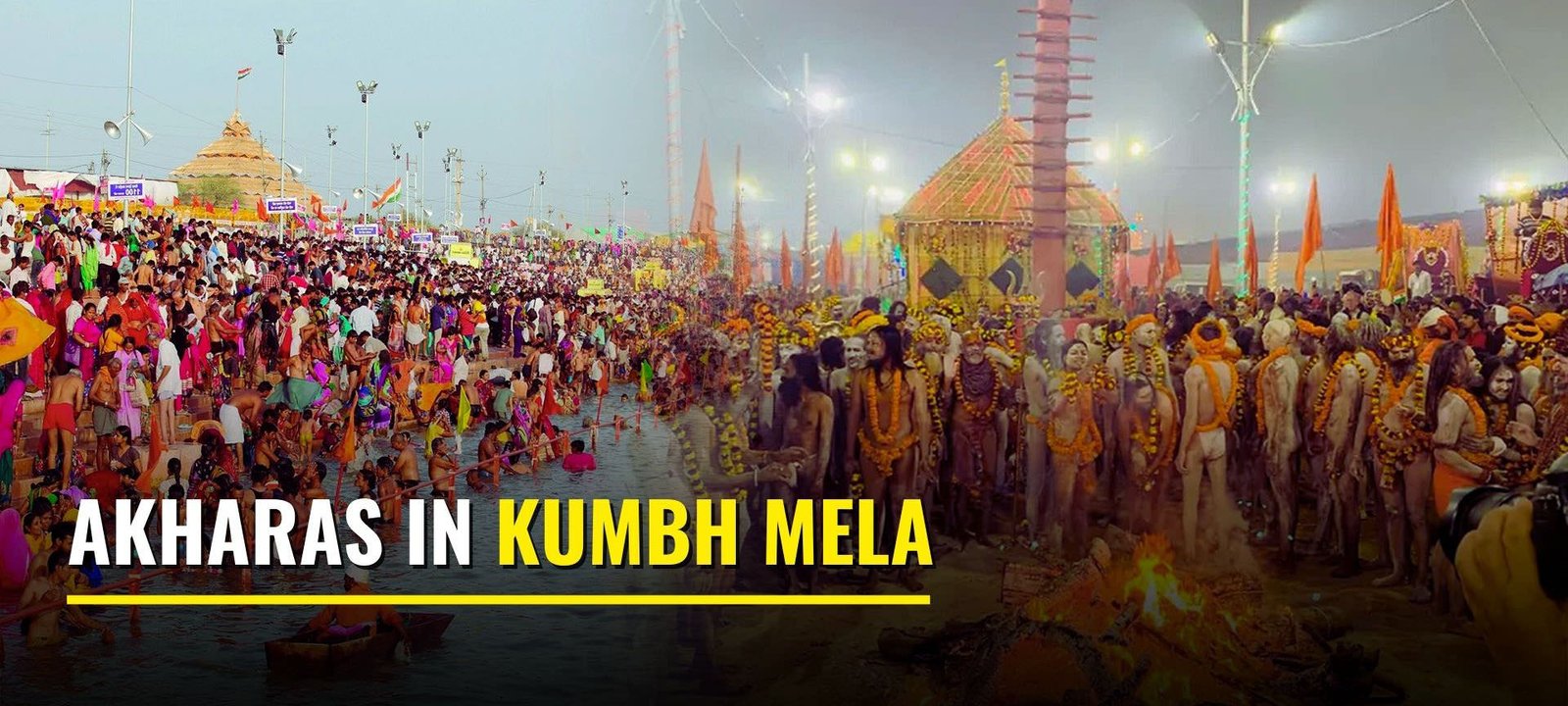
The Kumbh Mela is not only the largest spiritual gathering in the world but also a grand congregation of ancient Hindu monastic traditions known as Akharas. An Akhara is a traditional religious order or sect where sadhus and sanyasis of a particular group live, practice spirituality, perform rituals, and follow a disciplined lifestyle. During the Kumbh Mela, these Akharas set up large camps where devotees can witness spiritual discourses, meditation practices, and religious ceremonies.
One of the most fascinating highlights of the Kumbh Mela is the grand procession of Naga Sadhus, who belong mainly to Shaiv Akharas. These processions, known as Shahi Snan Peshwai, are marked by royal grandeur. The Mahants (spiritual leaders) are often seen seated on decorated chariots or elephants, followed by ash-smeared Naga ascetics carrying traditional weapons like tridents and swords. This procession symbolizes the ancient Chaturanga Sena (four-fold army) tradition of Hindu culture.
There are 13 Akharas in Kumbh Mela, broadly divided into three main categories. This complete Kumbh Mela Akhara List helps you understand the different sects and their spiritual significance.
These Akharas are dedicated to Lord Shiva and consist of devotees of Lord Shiva. The presence of Naga Sadhu in Kumbh Mela is one of the most fascinating and iconic sights, as they live an ascetic life completely detached from worldly desires.
These Akharas follow the path of Lord Vishnu and are also known as Bairagi Akharas.
These Akharas are associated with the teachings of Shri Chand, the son of Guru Nanak.
Akharas play a central role in the spiritual and cultural identity of the Kumbh Mela:
